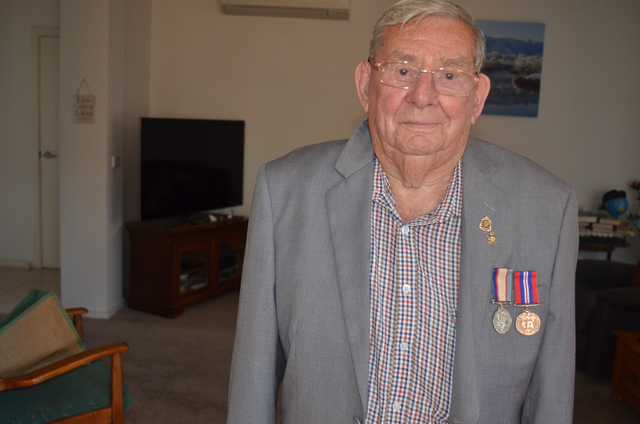
Pakenham resident Arthur Walker has survived more than most could imagine.
As he approaches his 100th birthday, he stands as a living testament to resilience, sacrifice, and an extraordinary life shaped by hardship and hope.
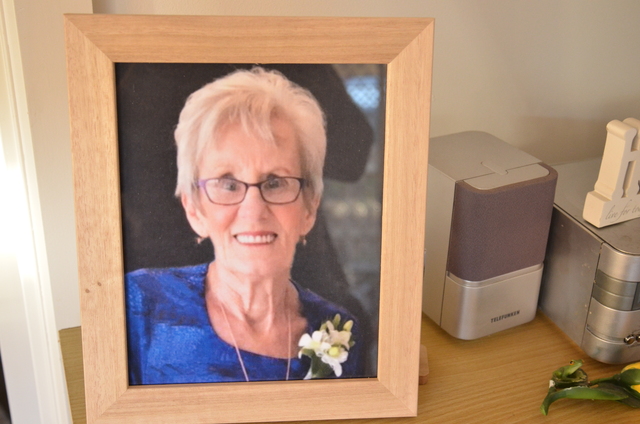
“I’ve achieved many things but I want to be remembered as Shirley’s husband because I’ve had more life with her than ever before,” he said.
Arthur’s life journey began with hardship and instability, learning to survive on the shifting ground of childhood before facing the dangers of wartime skies. His early years were spent moving between 12 different foster homes during the Great Depression, as his single mother couldn’t care for him.
One significant place in his childhood was the Menzies Home for Boys, which took in neglected boys under the care of the Children’s Welfare Department. He was also sent to a training farm in Lysterfield, where he worked on a fully operational farm for about 12 months until it closed down due to the war. He was then moved to the Tally Ho Boys Training Farm, followed by another placement on a 100-acre farm in Lilyvale.
“I just went from house to house, farm to farm. So, there’s nothing really outstanding in any of that. I still appreciate their service,” he said.
“I’m a bit disappointed because I never got a good education. I was very poorly educated in the home and I just had to put up with it.”
His time in foster care was a mix of difficult and more fortunate experiences, depending on the home he was placed in.
Arthur remembers, “it was a rare occasion that mother would come and visit me. I think she had about four visits in 10 years.”
He never called her “mother” but instead referred to her as “Sissy,” (short for Sarah) a name he used along with everyone else.
At 15, Arthur briefly returned to live with his mother, but their bond was never strong, and their time together was short-lived.
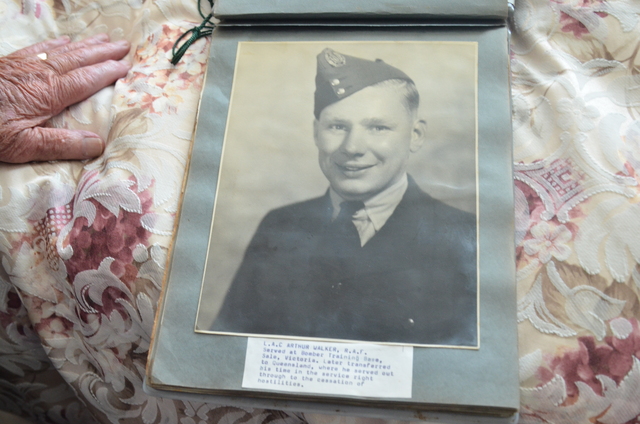
At 18, feeling a sense of duty to his country, he enlisted in the Air Force in 1943, marking the beginning of a new chapter in his life.
His guardian was one ..encouraged to enlist by his Guardian, although they never met during the war.
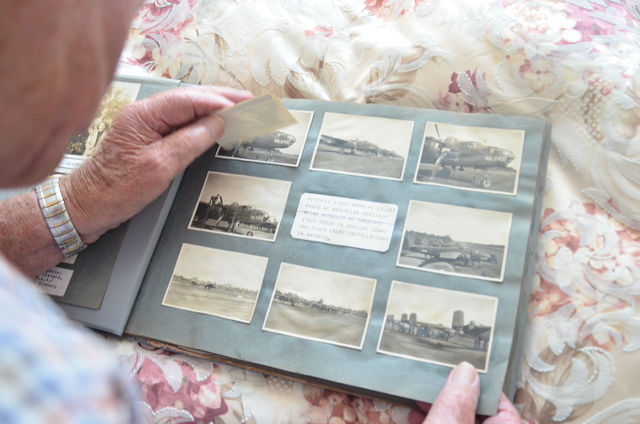
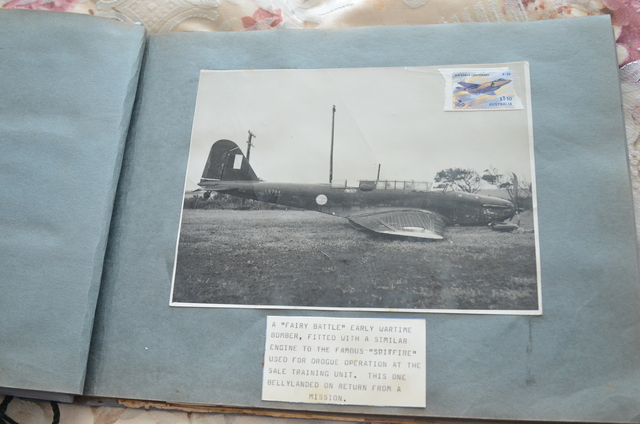
Stationed in Australia, Arthur served with the Royal Air Force (RAF), working at the No. 3 Bombing and Gunnery School.
“I was the youngest on the station and I was made the commanding officer (CO) within 24 hours,” he recalled.
“I worked as an armourer’s assistant and target drogue operator. That was my specialty and I got paid two shillings a day every time I flew.”
He flew 8 hours a day, often covering long distances, including flights from Gavo Island to Wilsons Promontory.
Despite not being a pilot, Arthur crash-landed two aircraft during his service, with one crash occurring near Balnarring and the other at Sale, along the Victorian coastline near the 90 mile beach.
He sustained a serious back injury in a crash and, with a strong mindset, had to simply get on with it, as mental health was not discussed at the time.
“I’m proud to have survived not one, but two crashes,“ he said.
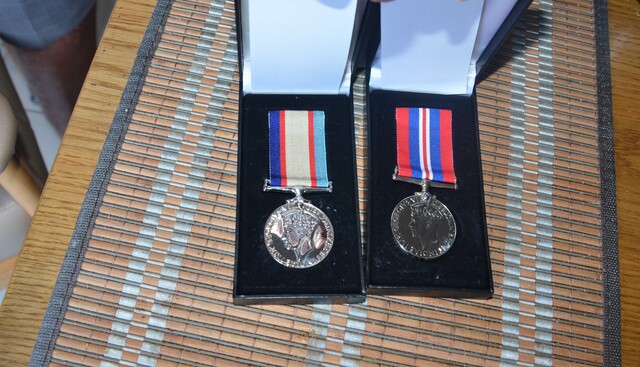
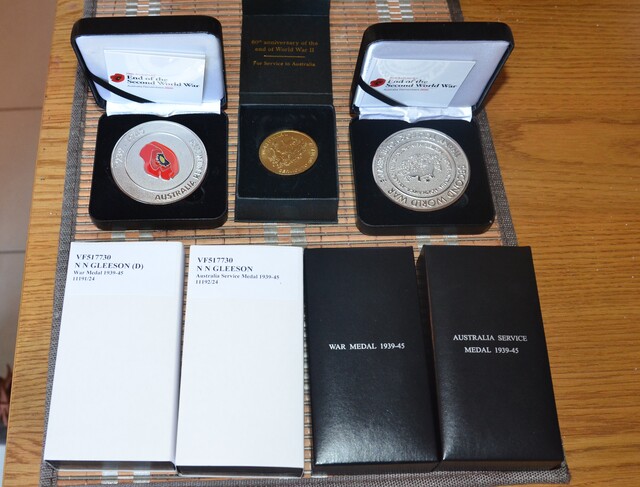
He also takes pride in holding the rank of Leading Aircraftman (LAC), and earning two medals in recognition of his service.
After being demobilized in 1946, Arthur transitioned into civilian life, where he took a bold step into the business world.
Over the next 22 years, he worked as a milk transport, picking up cows from farmers and delivering milk to dairies around southeast Melbourne, including Dandenong, Carrum Downs, and Cranbourne.
He took on truck repair duties, leading him to the mower business where he became service manager and enhanced his skills through courses in mechanics, welding, and auto-electrical.
“Getting to the position of foreman and service manager, for an uneducated bloke, it’s not bad.“
‘I never had a good education and I was lucky to get through what I did. Before I joined the air force, I thought there was no hope for me but it didn’t turn out that way.“
His resilience was tested again at 70 with diagnoses of bowel, bladder, and prostate cancer.
“I’ve had my problems with health, but I got over those and I’m still winning,” he said.
Among his greatest accomplishments, Arthur is most proud of being a father and a husband.
“I’ve achieved many things but I want to be remembered as Shirley’s husband. I’ve had more life with her than I ever could have imagined,” he said in tears.
“My children are doing great and have more money than I can imagine. I don’t need to advise them because they got it all.”
Surprisingly, growing up in foster care without active parents, Arthur’s own fatherhood was not negatively impacted, as his wife Shirley taught him life and parenting skills, shaping him into the father he is today.
“My wife was marvelous! She taught me how to live. She was one of eight. If we had any problems she knew all the answers.”
Arthur acknowledges that having children brought healing to his life, providing a sense of fulfillment and love that helped him overcome past hardships.
“We are one big loving family. I never had that before,” he said filled with joy.
“I enjoy being a father. My children are the best thing that has ever happened to me. As their father, they still love me and get in touch with me. They have already organised my 100th birthday in July.”
Arthur’s last message to his friends and family is simple: “Do as I do and you won’t go wrong,“ he said with a laugh.
For his community, Arthur hopes they will continue to celebrate Anzac Day as it’s a meaningful way to honor the suffering and sacrifices made by many.
“It’s just one of those things that you can’t miss out on, especially for me, being an old ex-serviceman.“