Children who play chess might be better versed to take risks than their peers, as well as aiding their arithmetic and rational thinking.
Researchers from Monash University and Deakin University conducted an experiment to examine the effects of intensive chess lessons with more than 400 Year 5 students who had no previous exposure to the game.
Students participated in a 30-hour chess program, endorsed by the World Chess Federation, across a three-week period.
They were assessed on their cognitive and non-cognitive behavioural changes, including risk, time management and ability to focus, for nearly a year after the training had ended.
What it showed was fascinating.
Playing chess from a young age could decrease risk aversion by exposing kids to win/loss scenarios and competition, as well as teaching children about strategic risk-taking.
In a survey conducted with students 10 months after the chess program, 99 per cent said they wanted more chess lessons, 94.5 per cent had played chess with a classmate in the previous week, and 87.5 per cent said they played chess regularly with friends or family.
The study was led by Professor Asad Islam (Director, Centre for Development Economics and Sustainability, Monash Business School), and supported by Dr Wang Sheng Lee (Fellow, Centre for Development Economics and Sustainability, Monash Business School) and Dr Aaron Nicholas (Senior Lecturer in the Department of Economics, Deakin Business School).
Professor Asad Islam said it could help model good risk taking behaviour.
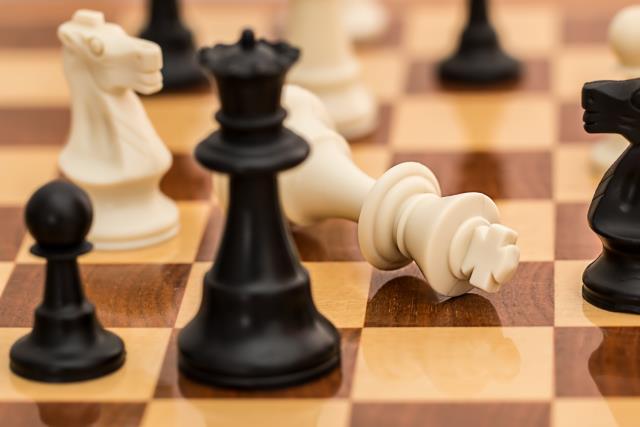
“Risk and reward is a concept that is articulated well in the game of chess. Players often sacrifice pawns, knights and bishops if it helps checkmate the opponent’s king and win the game. Such sacrifices are inherently risky because if one’s calculations are faulty, the sacrifice could prove to be fatal, eventually leading to a quick loss,” Professor Islam said.
“Children need to know how to take calculated risks. If children are too risk averse it might prevent them from swimming at the beach, going to a public park or participating in contact sports for risk of injury.
“Later in life, this could also extend to adolescent behaviours such as drugs, smoking, truancy, involvement in crime and in romantic relationships.
“In many life situations, it is also the case that with great risk often comes great reward. However, the line between necessary calculated risk-taking and reckless behaviour is sometimes difficult to determine. Learning chess can help bridge that gap.”
The researchers believe it could show the potential benefits of schools across Australia integrating the teaching of chess in the classroom to help young people deal with risk and reward later in life.
Interestingly, Armenia and Poland have already made chess instruction compulsory in their primary-school curriculum.