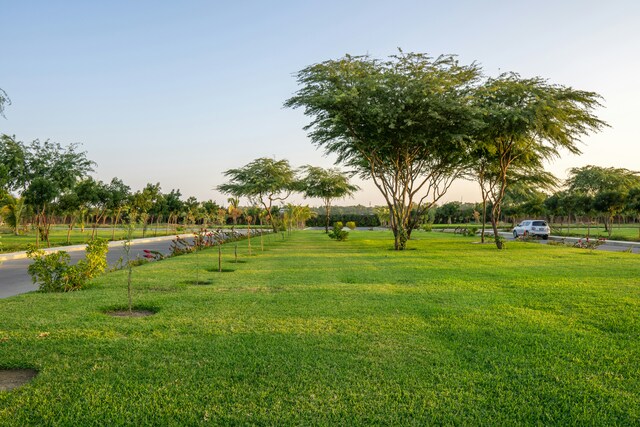
Living in areas with shorter distances to greenspace and lower crime rates are associated with having fewer modifiable dementia risk factors, Monash University-led research has found.
Published in Preventive Medicine Reports, the Australian study investigated neighbourhood characteristics associated with dementia risk and cognition.
It found a doubling of distance to greenspace was equal to being about 2.5 years older, in terms of dementia risk factors. Each two-fold increase in crime was approximately equal to a reduction in memory score attributable to a three-year increase in age.
This relationship was particularly evident in those living in areas of lower socioeconomic status (SES).
The greenspace aspect included people across Australia, while the crime aspect only looked at Victoria where that data was readily available.
Senior author Associate Professor Matthew Pase, of the Monash University School of Psychological Sciences and the Turner Institute for Brain and Mental Health, said earlier research had already shown that dementia disproportionately affected the disadvantaged.
“In 2022 we observed that individuals residing in lower SES areas had more dementia risk factors and worse memory performance,” Associate Professor Pase said. “Such findings motivated us to explore the specific neighbourhood characteristics associated with dementia risk and cognition.”
Associate Professor Pase said the new research encompassed some of the strongest modifiable dementia risk factors including high blood pressure, obesity, high cholesterol, and physical inactivity.
“Living close to greenspace may encourage or permit people to exercise more (e.g. walk or run) and also socialise (e.g., talk with locals in a park),” he said. “It may also limit environmental stressors such as air pollution and noise.
“In our latest study, proximity to greenspace was more important than the absolute amount of greenspace in an area. In other words, having lots of little parks that are closer to more people might potentially be better than having one big park that is further away.”
Associate Professor Pase said higher crime rates could possibly drive behaviours linked to dementia.
“People living in an area with a high crime rate might exercise, go out and socialise in public places less as a result,” he said. “More crime could also make it difficult to sleep and spark potentially harmful coping behaviours like smoking.
“Even a perception of crime might cause psychological stress, which we previously found can be associated with dementia risk. Another possibility is that those who are more educated, which protects against dementia, are able to live in areas with low crime rates, although we adjusted for these factors in our analyses.”
The project was driven by Dr Marina Cavuoto, now a senior research fellow and clinical neuropsychologist at the National Ageing Research Institute in Melbourne, and an adjunct senior research fellow at the Turner Institute for Brain and Mental Health.
Researchers calculated the percentage of greenspace in each postcode and the average distance to the nearest one for people living there. On average, people lived about 260 metres from the closest greenspace. Crime data were obtained from the Crime Statistics Agency based on data provided by the ABS.
Dr Cavuoto said governments could help improve the situation.
“Policy interventions by different levels of government could address social determinants of health at the neighbourhood level,” she said. “Collaboration between health and non-health sectors such as environment, infrastructure and housing is required to scale equitable and sustainable health promotion and dementia prevention.
“Programs that seek to improve modifiable dementia risk factors should consider the influence of neighbourhood characteristics. If governments moved to improve access to parkland and safety at a local level it could encourage healthier lifestyles that may reduce dementia risk factors.”
Associate Professor Pase said the results related to population averages and not individual people, so more research was required to understand these relationships more thoroughly.
“Wherever people live, healthy behaviours like managing blood pressure, maintaining a healthy weight, correcting any hearing impairment, avoiding smoking, regular physical activity, nurturing mental health, avoiding or treating diabetes, sleeping well, and social activity may all help,” he said.
“Individuals can make a start on those factors that are more easily addressable and within their control. Individuals can also work with family, friends and health professionals to overcome some of the barriers such as exercising in groups to help overcome safety concerns.”