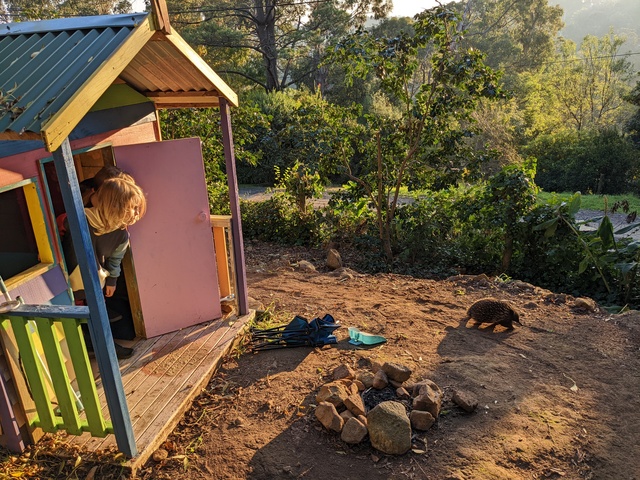
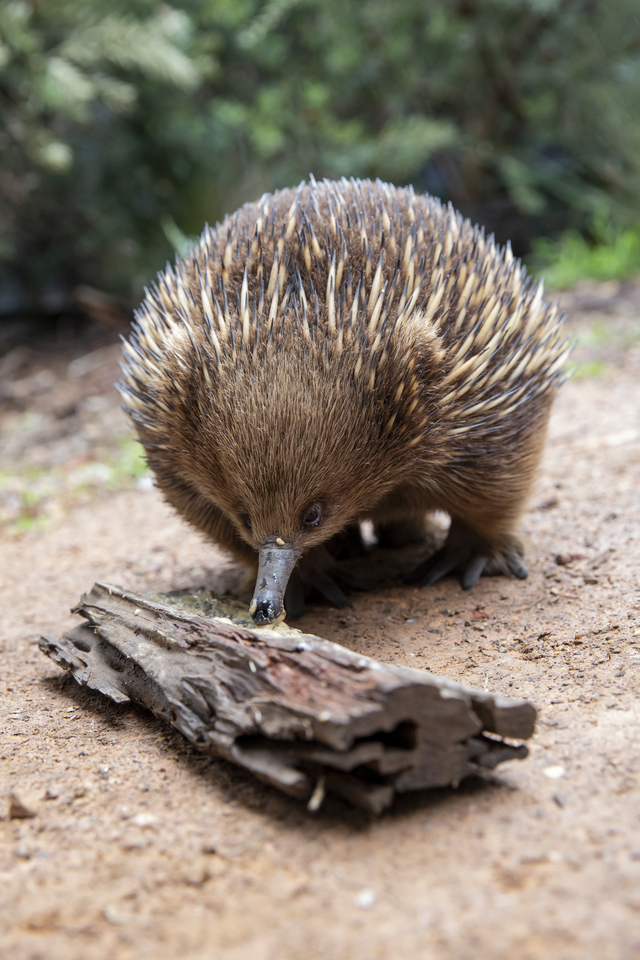
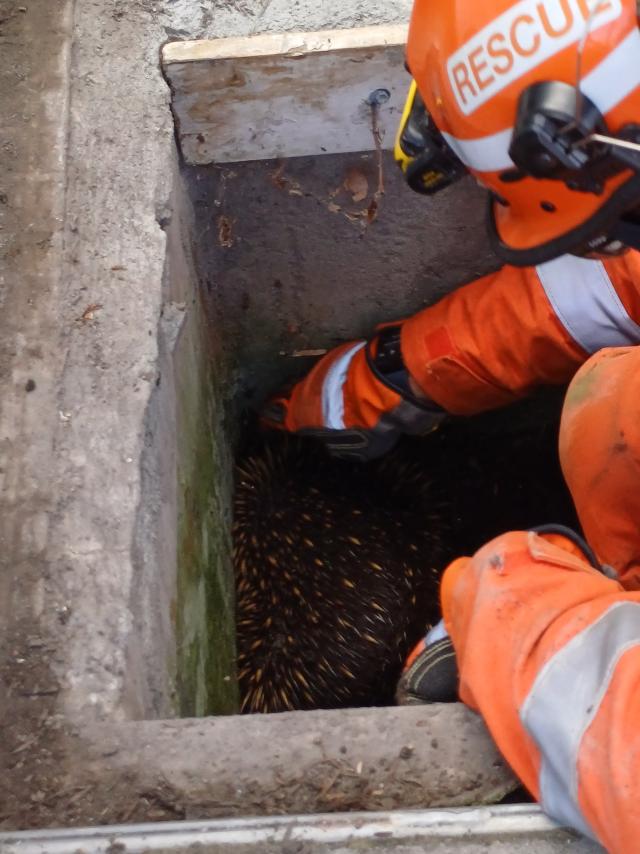
The summer months bring special moments to those living in the Yarra Ranges as the short-beaked echidna goes about its day and can often be spotted clambering through backyards and trying to cross roads.
Citizen science can come into play with these special moments and a group of echidna researchers in South Australia have been collecting images, recordings, scat and more from people all over Australia.
Star Mail journalist Tanya Steele is an unabashed monotreme enthusiast and spoke with Professor Frank Grützner from the Echidna Conversation Science initiative (Echidna CSI) and Healesville Sanctuary Mammal Keeper Craig McQueen about the importance behind these incidental sightings.
Echidnas are very hard to find in the wild when you are deliberately looking for them and from his research office in South Australia, Professor Grützner said this makes it really hard to do any research on them.
“If you actually want to find one, you know, you’d be wandering around. It’s really hard to predict,” he said.
Professor Grützner is part of a team of researchers dedicated to echidna research in South Australia and the team of researchers have developed an app to connect with the general community to learn more about the unique creatures, which launched in August of 2017.
“Generally, echidnas can be found anywhere in Australia. And I think that’s really remarkable to reflect on,” he said.
“If you think about the diversity of habitats across Australia, echidnas have been able to adapt to all these different environments and are able to successfully make a living all across Australia.”
So far thousands of Australians have sent the team photos of echidnas through their Echidna CSI app, even collecting echidna poo for the University of Adelaide researchers to use for molecular analysis.
“We want to understand more about echidnas so they can be protected,” Professor Grützner said.
Healesville Sanctuary mammal keeper Craig McQueen said by late October and early November, the weather conditions are often perfect for echidnas (not too hot, not too cold), which is why you will likely start seeing them become more active.
“Once the weather starts warming up and food becomes a little easier to find, you will likely see (or perhaps hear) echidnas rustling around searching for ants and termites,” he said.
Professor Grützner said the best-studied population of echidnas is at his doorstep on Kangaroo Island.
“My colleague and collaborator, Doctor Peggy Rees Miller studied the echidnas for over 30 years on Kangaroo Island,” he said.
“She says it can take up to 200 hours to find an one.”
The Kangaroo Island population of echidnas has been classed as endangered, while the rest of Australia class the short-beaked echidna population as stable with a status of ‘least concern.’
The localised research has shown how the rate of echidnas being killed by feral cats and cars is more than the numbers being born and so echidnas across Australia are likely under more threat than is currently recognised.
“For the rest of Australia, we still lack a lot of that information and we need to gather more,” Professor Grützner said.
The Kangaroo Island bushfires in the summer months of 2019 and 2020 meant the local echidna population dealt with a huge challenge to their environment.
“An echidna was spotted walking through the devastated area at that time and we than we began looking at changes in their scat pre and post-bushfire,” Professor Grützner said.
Specialising in genetics Professor Grützner said the Echidna CSI project has delivered thousands of sightings and over 800 scat samples so far.
“It’s a huge resource that has been built over seven years,” he said.
The researchers have also studied the differences in gut bacteria between echidnas living in the wild versus in captivity as well as regional differences.
“We found a very high diversity of gut bacteria but also a dramatic difference between echidnas that are captive and those that are wild,” Professor Grützner said.
“Prior to this, there was no genetic analysis of echidna scat and their gut bacteria.”
Professor Grützner said the scat itself is not disgusting as it isn’t smelly, and looks sort of a cylindrical and is around the the thickness of a finger.
“It’s probably a bit thicker than you’d expect and it’s basically compacted soil,” he said.
“Generally because of their sticky tongues, echidnas absorb enormous amounts of soil, which is interesting to think about – of course, they have insects and invertebrates sticking on there as well.”
The all-important echidna scat can sometimes give a glittery effect due to the presence of the bugs, securing their place as a fun fact animal if there ever was one.
Their back feet face backwards, they have no teeth and their tongues are roughly 18cm long.
Echidnas blow snot bubbles to keep cool and they are great swimmers and use their beaks as a snorkel.
“It can be very difficult to tell male echidnas from females,” keeper Mr McQueen said.
“Males grow slightly larger than females, but they otherwise look pretty much identical.”
“They can vary in size but can grow upwards of seven kilograms – which is a very big echidna.”
The echidnas at Healesville Sanctuary are always on the go and Mr McQueen said they provide them with plenty of enrichment opportunities to use all their natural behaviours.
“During the cooler months, echidnas go into an inactive state called torpor,” he said.
“This helps them to conserve energy in low temperatures, and they can go for days or even weeks at a time without needing to feed.”
Australia is also nearing the time of year when puggles (baby echidnas) from this year’s breeding season start emerging from their burrows.
“Like much of our native wildlife echidnas have been affected by human development – including roads in their natural habitat,” Mr McQueen said.
As they are moving from place to place, echidnas will inevitably need to cross roads and unfortunately, they don’t have the best road sense.
“They rarely look to be in a hurry to avoid cars,“ Mr McQueen said.
“It is extra important to slow down if you see an echidna crossing the road, as they may need extra time to cross safely compared to many other animals.
“Avoid trying to physically move them on, as they are more likely to bunker down if they feel threatened.”
Professor Grützner said if people keep an eye out for echidnas and get recordings of them, Australia-wide it will help researchers to record the distribution and patterns of movements of the echidnas.
“People can take a photo and then it has a GPS location on it,” he said.