Breast cancer never made me sick, but the treatment certainly did.
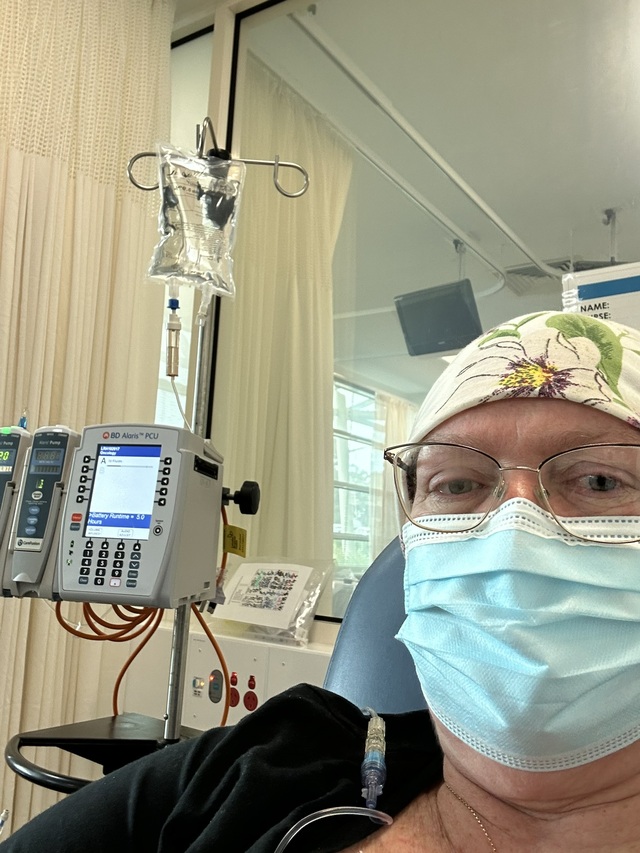
My cancer is gone but now I’m left living with the aftermath of chemotherapy, immunotherapy, surgery and radiation because cancer isn’t always over when it’s gone and when the treatment ends.
I was diagnosed with a non-specific type, HER-2 positive, grade three (fast growing) tumour in my left breast at about 10.30am on Thursday 19 December, 2023. Ladies – just get your mammograms. My tumour was only detected and diagnosed by a regular BreastScreen.
What followed was a flood of information and a maelstrom of tests, treatments and side-effects until I was finally told I was NED – No Evidence of Disease about 13 months later.
My official Health Record for that period shows 24 diagnostic imaging reports, including CT scans, with and without nuclear medicine, bone studies, PET scans, fluoroscopies, a lymphoscintigraphy (sentinel lymph node mapping to check for any spread of the cancer), ultrasounds, echocardiograms and even ordinary, bog-standard x-rays.
There were also 36 pathology reports. I was on a first name basis with the blood collectors.
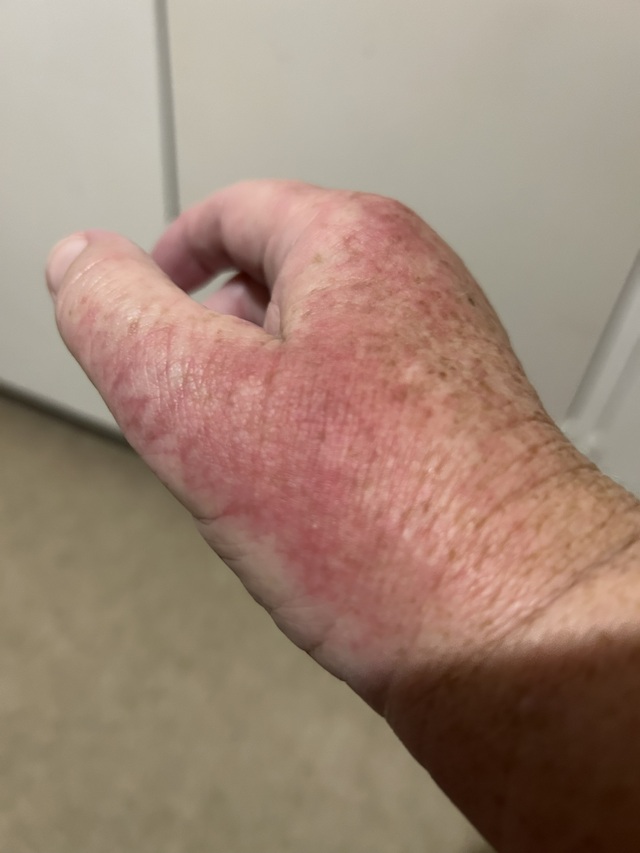
But that’s a rather dry summary of three different types of chemotherapy, and the innumerable side effects of rashes, nausea, diarrhea, fatigue and even just the pain caused by breathing on the back of my hands at times, not to mention all the medications to deal with those side effects.
Forget about hospital in the home. I had my own pharmacy in the home, and we hit the PBS threshold much earlier that year than ever before!
There were countless GP appointments, surgery to place a port for ease of treatment and another for a lumpectomy, not to mention three emergency department admissions along the way.
As well as my amazing GP who was there whenever I needed him – just as he promised immediately after my diagnosis – my medical team exploded to include a medical oncologist, breast surgeon, radiation oncologist, heart specialist, lung specialist, physiotherapist, occupational therapist, oncology nurses, radiation techs and nurses, McGrath BreastCare Nurse, and lymphoedema nurse.
My daily life was driven by medical administration, making and attending appointments, treatments, check ups, tests, tests and more tests.
But it wasn’t all doom and gloom.
Fortunately, I found my support community quickly. As well as my husband and our sons, we had other family members and some very close friends who were, and still are, there with us. From phone calls and visits to dropping off meals, they held us up in the tough times.
I was also fortunate enough to have wonderful support from my employer, the Star News Group. They immediately made it possible for me to work from home and always encouraged me to take the time I needed when I wasn’t well enough to work.
A Facebook support group for Australian women with breast cancer let me know I wasn’t the only person going through whatever that day’s experience was. There are 58 people diagnosed with breast cancer in Australia every day so someone else out there has been through it before me.
And the cancer community on X (formerly Twitter) was a bastion of support from people around the world where we got so close that I cried when two of my X friends died.
From day one I was assured that this was a beatable cancer, so I had a good headspace about my outcome.
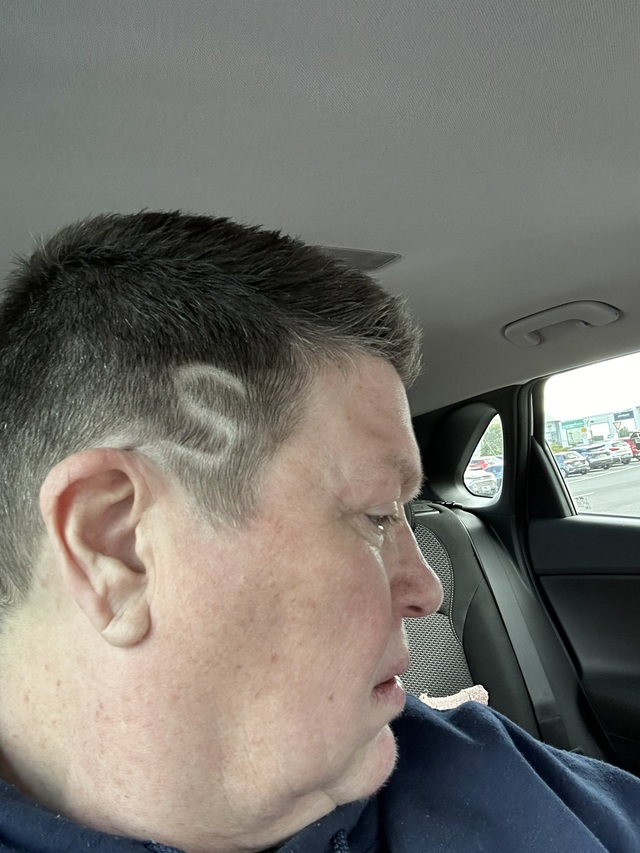
Sure, I lost my hair to chemo, but it grew back.
In fact, it was just long enough at the time of my twin granddaughters’ fifth birthday party to have their initials shaved into the sides of my head. Yeah, I was the cool grandma that day.
But cancer isn’t necessarily over when it’s gone and when the treatment ends.
It’s certainly not over for me.
Before my own experience I didn’t know that cancer treatment could leave permanent after-effects. I thought I would just go through the treatment and then go back to life as it was before.
A lot of women in the Facebook support group get frustrated when people in their lives think they should be back to the person they were before cancer.
Most of us live with ongoing fatigue, tiredness beyond tired. We plan our days and weeks to avoid overdoing it because we know how hard that fatigue will hit us.
I have to take hormone blockers for 10 years because my type of cancer, HER-2 positive, feeds on oestrogen, and hormone blockers can have side effects. I’ve already been switched to a second type of hormone blocker because the first one caused such severe joint pain that I could barely walk.
Blocking hormones affects bone density, so for the next couple of years I have to have infusions every six months to build up my bone density. And scans to check they are working.
But there’s more.
It’s called peripheral neuropathy, basically nerve damage caused by chemotherapy, the very thing saving my life.
It started with tingling fingers and toes and quickly turned into numb hands, fingers and feet. I was dropping things because I couldn’t feel them to grip properly.
Walking took all my concentration. I couldn’t get my car keys out of my pocket and walk at the same time. I stumbled on uneven ground.
Then I had a couple of falls because my feet weren’t feeling the ground properly.
That’s when my medical oncologist called a halt to the chemo. She said the risk of permanent damage was greater than the benefit of more chemo.
Unfortunately, the damage had been done, and she now believes my neuropathy is permanent. So don’t be surprised when you see me moving slowly, sometimes with a walking stick.
As if that wasn’t enough, I also have a persistent nighttime cough so bad that it leads to vomiting most nights.
My lung specialist believes it’s also permanent damage caused by radiation – another factor in saving my life. I’m going through testing to rule out other possible causes, but it seems like this is just one more thing I will just have to live with.
Am I grateful my cancer was detected early and successfully treated?
Absolutely!
Would I do anything differently if my cancer returns?
No, I would still follow the advice of the experts who have got me through this time. I might ask more questions about side effects and permanent after-effects, but I’d still rather be alive.
What I would ask is that the broader community be aware that the end of treatment isn’t necessarily the end of the effects for many people. Don’t be surprised when they have a rough day or week, when they’re frustrated that they will never be the person they were before cancer.
Just be there for them, with us.