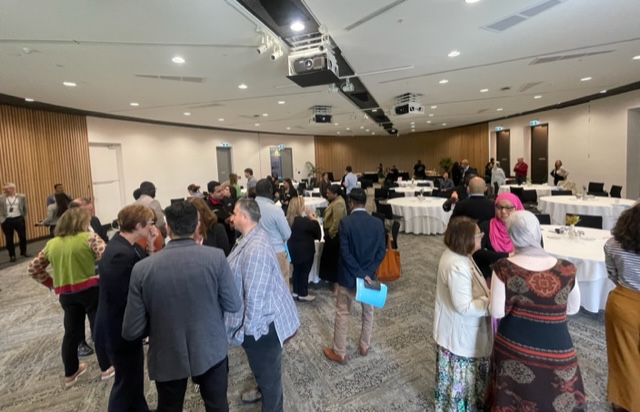
An anti-racism support network has provided its first insights after a year of documenting racism across the state, the first of its kind in Australia.
The network, established in 2025 consists of community-based support services in three locations, Wyndham, Whittlesea and the South East, to not only document racism in those areas but also encourage victims to report incidents in a push to “break the silence.”
In a joint statement, the network has compiled systemic racism locally, 52 cases were formally recorded in the past year.
Associate professor at Victoria University, Dr Mario Peucker says this is the first local evidence of racism based on complaint data in the south east or anywhere in the country, rather than research or studies.
“The networks have done incredible work, which should not be reduced to the actual number of documented cases.
“This is just the tip of the iceberg. The power and success lies in their ability to open up safe spaces for communities to break the silencing effect of racism and speak out and be listened to.
“The networks have limited power to change the lack of accountability, at least in the short term, but if they are able to continue their support and advocacy work, they can certainly help tackle that problem as well.”
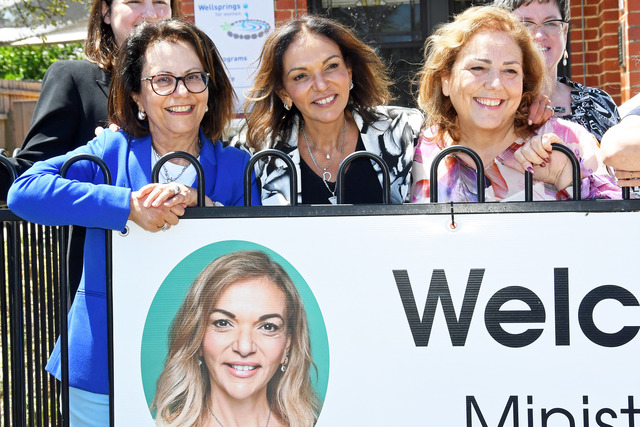
The South East network is co-led by South East Community Links (SECL) in partnership with Wellsprings for Women, Southern Migrant & Refugee Centre (SMRC), and the Centre for Multicultural Youth (CMY).
“While this number represents only a small fraction of the experiences shared by community members, this emerging local documentation will help paint an evidence-based picture of the scope and nature of racism locally and shape targeted measures to address racism where it happens,” the joint statement acknowledged.
Wellsprings for Women chief executive Dalal Smiley says with little funding, organisations could only dedicate five hours a week on the initiative but they aimed to go far beyond what the funding allowed them.
“I think we are operating in a very constrained financial environment while racism is on the rise and yet investment in social cohesion is becoming increasingly challenging.
“The other challenge was about planning ahead as funding ceased in October last year and we still don’t know whether there will be any further financial support from the State Government.
“The three local Councils in the South East have committed to in-kind support with venues in their respective municipality but no financial support for the time being.
“If this is not the time to invest in combatting racism then when?”
According to the data collected by the network, a majority of recorded incidents occurred in public spaces, particularly on the street, in car parks, on public transport (8) and in shops/shopping centres (8), as well as in employment (10) and schools or other education institutions (7).
The most commonly reported types of racism were described as verbal abuse or insults (33) and discrimination (25), but more than one fifth of the incidents (11) were recorded as verbal threats.
In 42 of the 52 documented cases of racism, women were targeted. Many of them being deeply impacted by the experience; some for example, decided to not use public transport any more or to take off their hijab in public.
The network say hundreds of community members shared their stories of racist abuse, threats anddiscrimination but they’ve also highlighted the importance of having safe spaces where people can feel supported and listened to.
However, victims are reluctant to take it further to the authorities due to factors like the uncertainty of the outcome especially when lacking evidence or confidence.
Ms Smiley says a dedicated case worker is needed to help victim’s “unpack”, outline options and support them in their decisions.
“These are aspects that were beyond the scope of this initial funded project and which we are now hoping with further funding we might be able to do more of.”
She says the project has tapped into the potential of the project but the clear underfunding without any prospects of funding renewal so far limits the progress of this first of its kind data.
The State Government’s five-year Anti-Racism Strategy published in November 2024 is said to be backed by a $4 million investment over two years to deliver four flagship initiatives.
These include: the Local Anti-Racism Initiatives (LARI) Grants Program, a state-wide anti-racism campaign in sport, a program to strengthen front line police capacity to take human-rights centred approaches when engaging with First Peoples and multicultural communities, and a workplace anti-racism program led by the Victorian Equal Opportunity and Human Rights Commission.
“Racism and hate have no place in our state – it’s why we have delivered the nation’s strongest anti-vilification laws and are the first jurisdiction in Australia to deliver an Anti-Racism Strategy, backed by a $4 million investment,” a Victorian Government spokesperson says.
“But we know there’s more to do – it’s why we’re establishing Multicultural Victoria, developing a whole-of-government Multicultural Strategy and have delivered $5 million to strengthen the capacity and sustainability of multicultural organisations.”
It’s also said that the government will invest $6 million in a community-led action to combat antisemitism and Islamophobia by supporting local projects that strengthens community resilience.
The Anti-Racism Network initiative was born out of the report by Mr Peucker and Professor Tom Clark, Towards Improved Anti-Racism Support in Casey and Greater Dandenong.
It was conducted by Victoria University in partnership with the two councils and launched on Thursday 20 April at Bunjil Place.
Mr Peucker and Professor Tom Clark collaborated with community organisations and residents to develop a local ‘roadmap’ of practical ways that reporting and support services could be tailored to the specific needs of local communities.