At a time when much of the world is heavily dependent on mobile and digital services, Casey’s new cellular mapping tool launched in early February, highlights major coverage gaps in the growing region.
The signal mapping tool allows residents to engage with accessible insights on mobile connectivity in Casey, working as an interactive 4G and 5G mobile signal map to identify where reception may be strong, patchy or weak.
Community pressure to develop telecommunication infrastructure around Casey has been longstanding, with many complaining that inadequate network coverage has impacted their daily lives, from lack of adequate connectivity to work, school and emergency services.
The map highlights significant cover disparities across the region, with inconsistencies in signal strength between established suburbs and the growth fringes, such as emerging areas in Clyde and Clyde North identified as black-spots.
While 4G remains the backbone of the region, developing suburbs exhibit persistent poor signal areas and despite being high-growth regions with increasing populations, infrastructure has not kept pace with residential development.
According to the map, high-speed bands are frequent but often have the poorest indoor penetration, creating a pattern where performance drops off sharply once a user enters a building.
The map also allows for a direct comparison of Victoria’s three major telecommunication carriers, including Telstra, Optus and Vodafone.
And while no single carrier provides “excellent” coverage across the municipality, the pattern highlights pockets where one carrier may perform better.
A spokesperson from Connecting Victoria said that mobile coverage delivered by mobile infrastructure is largely determined by commercial decisions of mobile carriers.
“The rapid establishment of new estates in growth areas means that mobile coverage or capacity on existing mobile towers may not keep pace with community demand,” they said.
“In addition, sometimes mobile carriers report difficulties in securing suitable locations to install mobile telecommunications infrastructure after developments have been completed.”
In recognition of the issue, the City of Casey has voted to submit a recommendation to the ALGA secretariat that will call on the Federal Government to have a greater presence in leading discussions with states and territories to deliver planning controls that require delivery of cellular telecommunications infrastructure in new residential and commercial estates, particularly in growth areas.
Casey’s mayor, Stefan Koomen said that the council understands that mobile phone networks and infrastructure is an “essential service”.
“Historically, there have been limited requirements to consider mobile infrastructure in new developments, and as demand increases, available space for new infrastructure is often inadequate to address service gaps,” he said.
“For this reason, council is advocating for better planning controls to require earlier delivery of cellular phone infrastructure in new estates to avoid the service gaps we are seeing in suburbs like Clyde North.”
Federal member for Holt, Cassandra Fernando, has also been a stern advocate for telecommunication infrastructure around the region and says that more work is needed to ensure the community is connected.
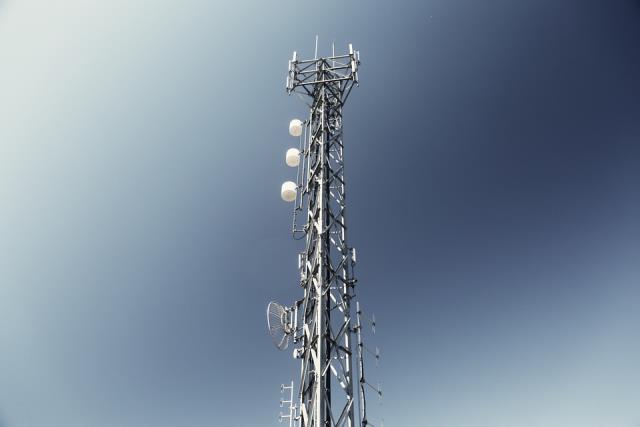
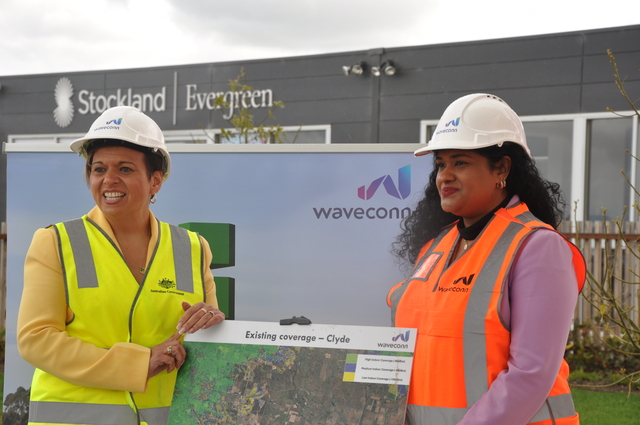
In 2022, the Federal Government’s Peri-Urban Mobile Project (PUMP) secured funding for two mobiles in Casey, including Clyde’s Bells Road and Blind Blight near Tooradin, aiming to boost coverage for numerous estates in the growth fringes — both are still in progress.
This brings a total of 12 towers scheduled for delivery by the end of 2027.
Ms Fernando says that her advocacy will continue, telling Star News that “there is still more work to do”.
“I will continue advocating strongly for improved telecommunications coverage across our community,” she said.
“As Casey grows, infrastructure must keep pace.
“That means ongoing collaboration between all levels of government, developers and telecommunications providers to ensure no household is left behind.
“Everyone deserves reliable mobile service, and I will keep pushing until every home in Holt can stay safely connected — because in a modern community, mobile access is just as vital as running water.”
Those who would like to explore the new signal map can go to, data.casey.vic.gov.au/page/cellular-mapping.