Berwick’s Chloe Oldham, a wildlife enthusiast and conservationist, just got back from a once in a lifetime trip that might prove critical for her future endeavours.
Landing back in Melbourne after a three week experience in Nepal, Chloe describes the trip as an “invaluable experience”.
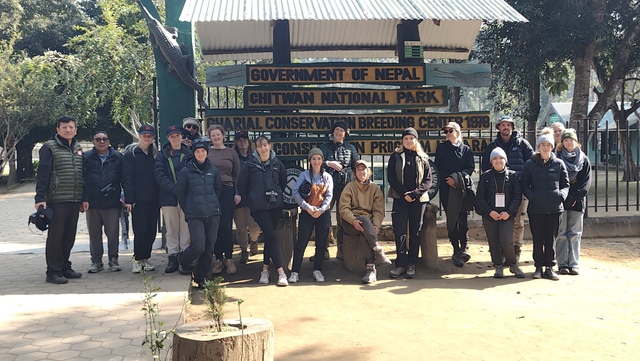
With 16 other like-minded peers, undergraduate science students from Federation University got the opportunity to travel to the Himalayan country to gain hands-on skills in wildlife and habitat monitoring.
Hosted by Nepal’s National Trust for Nature Conservation (NTNC), students were able to acquire critical knowledge regarding wildlife conservation approaches for species like the Bengal Tiger and One-horned Rhino in the lowlands of Terai.
Chloe, who is completing her Bachelor’s in Veterinary Medicine and Wildlife Science, is particularly interested in endangered species conservation and says it was a highlight of her trip.
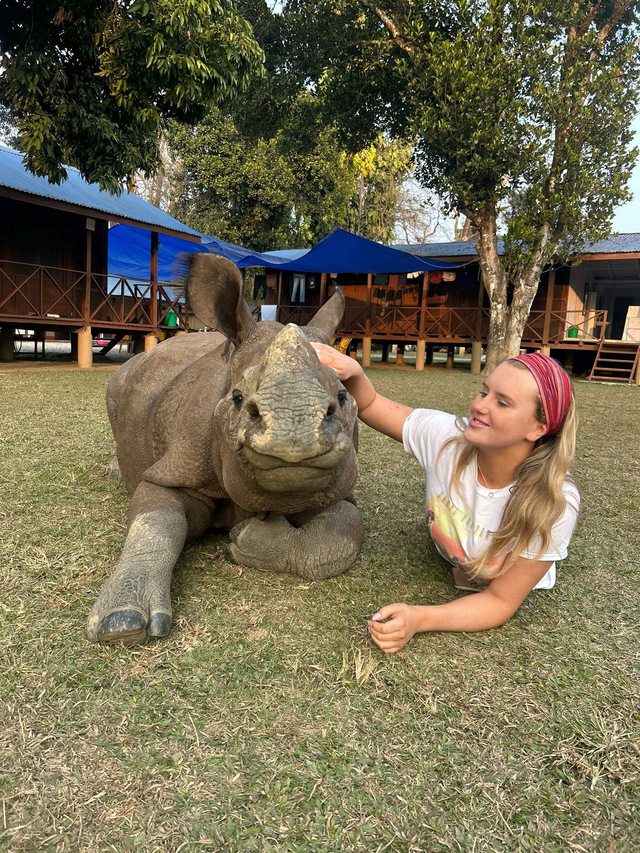
“I’m interested in the conservation of endangered species, so my favourite part was getting to interact directly with threatened species such as the greater one-horned rhinoceros,” Chloe said.
“At the biodiversity conservation centre, they have an orphaned juvenile rhino rescued from the jungle and during the day he comes over to hang out with us.
“We were staying on the edge of the jungle and every morning we were waking up to the sound of elephants, it was amazing.
“I was amazed by how much the NTNC has been able to support communities in reducing the use of natural resources and developing alternative incomes.
“This has been a major factor in restoring the habitats of endangered species in Nepal.”
The university’s Professor of Conservation Biology, Wendy Wright, said the program was entering its sixth year and was excited for further opportunities to build lasting connections with Nepal’s conservation community.
“This immersive field experience is enabling students to broaden their global perspective and engage with new ways of thinking about wildlife conservation and animal health,” Professor Wright said.
“Students are introduced to Nepal’s community-based conservation model, where they can gain valuable insight into the forestry system.”
Out of the 16 students involved in the study abroad program, six have remained in Nepal for a further three weeks to complete internships with the NTNC veterinary team, living and working with conservation and veterinary staff.