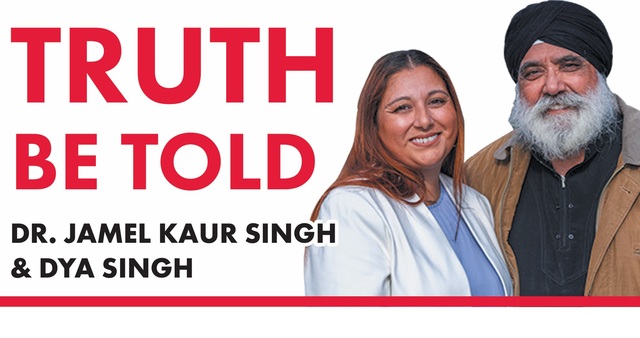
We’ve been asked to broach the subject of Pauline Hanson.
Now that’s a tough one.
Because damned if we do.
Damned if we don’t.
How do you speak truth when half the country may jump down your throat?
Where is the line between freedom of speech and hate speech?
How do you call out realities without inflaming division?
In true Truth Be Told format – let’s start with facts.
Thank God, it is refreshing that Auntie Pauline steps aside of political correctness and says what others are thinking but dare not say – but…
Religious texts – all of them – contain passages that, taken literally and stripped of context, sound confronting.
There are verses about warfare.
There are verses about slavery.
There are verses about punishment and exclusion.
In some traditions, slavery existed but was regulated with strict rules about humane treatment.
In others, warfare passages were tied to specific historical treaties and conflicts.
Context matters. Interpretation matters. Modern application matters even more.
To weaponise isolated lines from any scripture – without context – is intellectually lazy.
But here is the uncomfortable truth:
When communities see practices that appear inconsistent with modern democratic and human rights values – whether around gender, dress, law, or funding – questions will be asked.
And sometimes, Pauline Hanson asks them.
When refugees appear to receive faster access to housing or support than struggling Australians, resentment grows.
When government funding flows visibly to certain religious or cultural organisations, while others feel unheard, frustration grows.
When symbols like the burqa enter Parliament as protest theatre, reactions range from outrage to laughter – but the underlying issue remains: identity politics sells.
When citizens must remove helmets at banks for identification, yet see full-face coverings in other contexts, some will ask – where is consistency?
These are not insane questions.
They are triggers for social friction points.
Ignoring them does not make them disappear.
But here is where the line shifts.
When rhetoric moves from questioning policy to targeting people, it fractures cohesion.
When climate action is blocked without viable alternatives, progress stalls.
When equality legislation is opposed wholesale, without nuance, trust erodes.
When funding controversies and past associations with overseas lobby groups surface, questions about influence and democracy are legitimate.
Democracy requires scrutiny – of everyone.
Including those who claim to “tell it like it is”.
Let’s look at Singapore.
Widely described as a guided or “illiberal” democracy, it maintains elections but tightly controls political freedoms to preserve stability. It is often praised for efficiency, meritocracy and order.
But it is also criticised for limiting dissent.
So here’s the question:
Do we want louder democracy? Or more controlled democracy?
Because both have trade-offs.
Australia’s democracy is messy.
Money influences politics.
Lobby groups exist across the spectrum – mining, unions, renewables, pharmaceuticals, guns.
Pauline Hanson is not unique in being influenced by funding networks. That is a structural issue in our system.
Money talks.
It always has.
The real issue is not one senator.
It is whether our democracy allows disproportionate influence to override balanced policy.
As a father who migrated and built a life here, Dad believes deeply in the right to speak freely.
As an educator working in cultural policy, I believe deeply in the responsibility that comes with that freedom.
You can raise hard questions without dehumanising communities.
You can critique policy without fuelling prejudice.
You can defend national cohesion without isolating minorities.
That is the difference between leadership and provocation.
So yes – sometimes Aunty Pauline voices frustrations many Australians quietly hold.
But if those frustrations are amplified without solutions, without nuance and without responsibility, they become fuel – not reform.
Truth be told… democracy survives not on who shouts the loudest, but on who governs with balance.
And that’s the standard we should hold everyone to.