As concerns increase regarding fuel prices across the state with warnings against panic buying, one of Casey’s cheapest fuel stations in Cranbourne has run out of U91 fuel and diesel with some U95 left to spare.
New laws have come into place in Victoria, legally requiring fuel stations to lock in their fuel prices 24 hours before the following day.
Officially taking effect on 10 March, the daily cap law requires retailers to submit their maximum price for each fuel grade by 2pm.
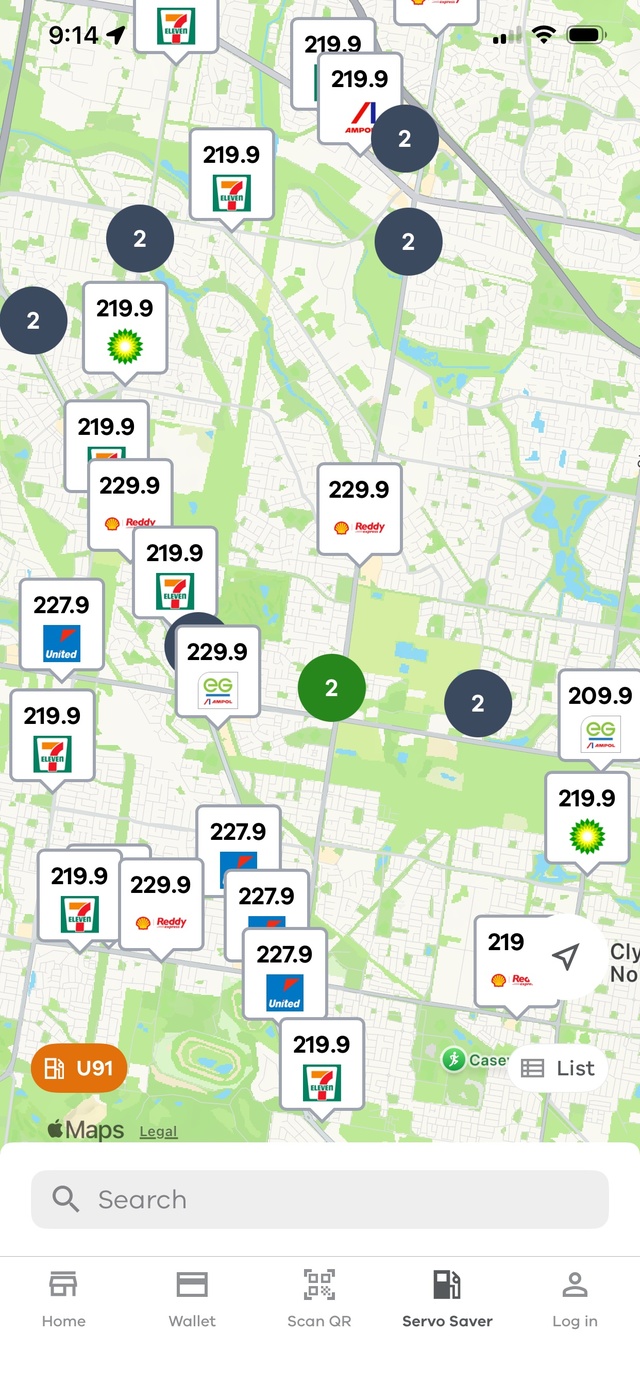
This locked-in capped price is then published on the ‘Servo Saver’ tool by 4pm, which can be accessed through the Service Victoria app.
From 6am the following morning, the capped price will lock in for a full 24 hours and while servo stations can drop their prices throughout the day, they cannot increase them.
If a retailer doesn’t submit a cap, the previous day’s price will roll over.
Penalties exist for petrol stations that don’t register or fail to report their prices, with fines exceeding more than $3000 for each breach, or more than $24,000 if taken to court.
The Minister for Consumer Affairs, Nick Staikos, said that the newly introduced price cap will help consumers “shop around for the best deal and put more downward pressure on prices.”
Fuel prices have been a topic of interest over the past few weeks, as the conflict in the Middle East continues, causing disruptions to the flow and transport of fuel in Australia.
The Victorian Automotive Chamber of Commerce (VACC), is calling attention to the retail margins involved in the reality of fuel pricing.
According to a media statement released by the VACC, Government established taxes such as fuel excise and GST, make up roughly 30 to 35 percent of every litre sold.
Global fuel costs such as crude oil, refining and international shipping account for a further 50 to 55 percent.
“Service stations are price-takers, not price-makers. When global markets move, retailers feel it immediately — but they have almost no capacity to cushion the blow for customers or for their own businesses”, VACC CEO, Peter Jones said.
On Tuesday 10 March, the Federal Government held a meeting of a new taskforce intended to address the current fuel supply chain issues, with Energy Minister, Chris Bowen, maintaining that there has been no disruptions to fuel imports and arrivals and that rising prices are due to panic buying and increased consumer demand.
Minimum reserve requirements are in place if needed. The main concern of the federal government now is to meet the current demand, especially from farmers.
“The key message is, while there are challenges and uncertainties in all international supply chains at the moment, the preparations that the government has put in place for the minimum stock obligation are working,” he said.
“If it’s necessary to access those minimum supplies, we will, but we’re not there at this point.”
Suppliers are required to hold minimum reserves of petroleum products. Refiners must hold 24 days worth of usual demand for petrol and 20 days worth of diesel supply. Importers, who account for around 90 percent of the country’s fuel supply, must keep a reserve stock of petrol and diesel worth 27 and 32 days, respectively.
VACC’s Mr Jones emphasised that frontline staff and station owners, “are not responsible for fuel prices”.
“Service station workers don’t control global oil prices or fuel taxes,” he said.
“They’re often the first people customers see when prices are high, but they’re not responsible for the price at the pump.”
In an enquiry made to the Casey community regarding the new laws capping fuel prices, one Casey resident echoed the VACC’s sentiments but also expressed apprehension about the state’s new strategy.
“What I saw this morning is this strategy is driving fuel prices up,” they said.
“Diesel has gone up 25c/ltr overnight at a couple of petrol stations that I passed this morning (11 March).
“This diesel would have been purchased at pre-conflict prices as well, so the profit margin at the moment would be very high somewhere along the supply chain.
“We can’t necessarily blame the individual petrol stations because it seems to be happening across the board, which means that it is happening elsewhere in the supply chain.”
Star News was told around noon on 11 March by an APCO staff of the lowest price servo store in Cranbourne, that they had run out of U91, diesel, and had only a little bit of U95 left, saying they might refill overnight.
Upon a media release, APCO said that a “strong demand has resulted in temporary stock shortages at all locations.”
We had a closer look at the Servo Saver tool. Here’s what we found:
CASEY SOUTH U91 PRICES:
Cranbourne (3977)
Highest: 229.9
Lowest: 205.9
Clyde (3978) –
Highest: 229.9
Lowest: 209.9
Lynbrook (3975) –
Highest: 229.9
Lowest: 209.5
Hampton Park (3976)-
Highest: 229.9
Lowest: 219.9
Tooradin (3980) –
Highest: 229.9
Lowest: 229.9
Pearcedale (3912) –
Highest: 219.9
Lowest: 219.9
CASEY NORTH U91 PRICES:
Narre Warren (3805)
Highest: 229.9
Lowest: 219.9
Berwick 3806)
Highest: 229.9
Lowest: 219.9
Hallam (3803) –
Highest: 229.9
Lowest: 219.9
Clyde North (3978)
Highest: 229.9
Lowest: 209.9
Endeavour Hills (3802):
Highest: 229.9
Lowest 211.9
Doveton (3177):
Highest: 219.9
Lowest: 219.9